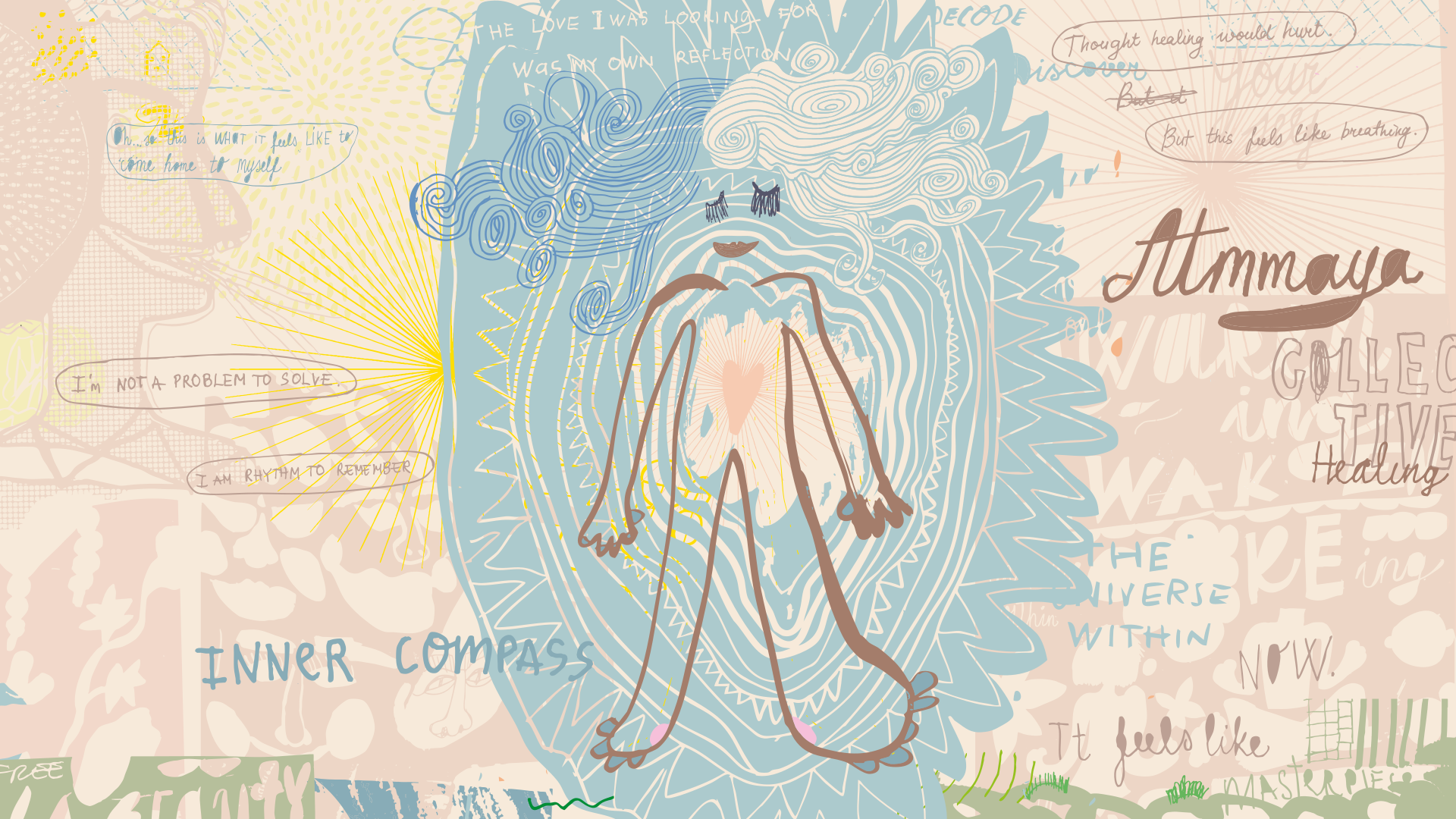
The Child Inside You Is Still Waiting to Be Heard
Written By: Shwetambari Bhatt
9th October 2026

The Child Inside You Is Still Waiting to Be Heard
You grow up. You leave school, get a job, build relationships, pay bills, make decisions, and learn how to handle life on your own. Somewhere along the way, you may assume that the child you once were has been left behind.
But that is rarely how it works.
The younger version of you can still show up in the way you react to rejection, deal with conflict, ask for love, or protect yourself from disappointment. Sometimes you may not even understand why something affects you so deeply. A small comment can stay in your head all day. Someone not replying to your message can make you feel unwanted. Criticism can feel much bigger than it should.
You may tell yourself, "Why am I reacting like this?"
Maybe there is a younger part of you that has been asking that same question for years.
The child you were still lives in your reactions
Think about a child who learned that being quiet kept the peace at home. Years later, that child becomes an adult who struggles to say no.
Or someone who only received praise when they performed well. As an adult, they may constantly chase achievements because slowing down makes them feel like they are not enough.
Someone who was often ignored may become highly sensitive to being left out. Someone who was constantly criticised may become their own harshest critic.
These patterns do not automatically mean that someone had a traumatic childhood. Childhood is much more complicated than that. Sometimes it is about one big experience. Sometimes it is a collection of small moments that slowly shape the way we see ourselves.
The point is not to blame your parents, your childhood, or anyone else. The point is to become curious about yourself.
Your reactions are giving you information.
Why certain things still hurt so much
As adults, we often judge our emotions before we understand them.
You might call yourself "too sensitive" because you were hurt by something that others considered small. You might think you are needy because you want reassurance from someone you love. You might avoid difficult conversations because conflict makes you deeply uncomfortable.
Instead of asking, "What's wrong with me?", try asking, "What is this feeling trying to tell me?"
That small change in the question can make a huge difference.
Maybe your fear of rejection comes from years of feeling like you had to earn affection. Maybe your need for control comes from growing up in situations where things felt unpredictable. Maybe your habit of keeping everyone happy comes from learning that other people's emotions were more important than your own.
Understanding these patterns can improve your emotional health because you begin responding to yourself with curiosity instead of criticism.
You may be carrying needs you never learned to express
Children do not always have the words to explain what they need.
They may not say, "I need emotional reassurance."
They may simply become quiet.
They may not say, "I am scared that you will leave me."
They may become clingy.
They may not say, "I feel like I am not good enough."
They may become obsessed with getting everything right.
As adults, we develop better language, but the old patterns can remain.
This is where inner-child work can become useful. It is not about pretending to become a child again or blaming the past for everything happening in your life today. It is about noticing the younger parts of yourself that still carry fear, shame, loneliness, anger, or a need to be accepted.
Sometimes healing begins when you finally give those feelings the attention they were missing.
Listen before you try to fix yourself
We live in a culture that loves solutions.
Feeling anxious? Fix it.
Feeling insecure? Become more confident.
Having relationship problems? Move on.
But emotions do not always disappear because we tell them to.
Sometimes they need to be understood first.
You can start by noticing your triggers. When do you feel rejected? What kind of criticism affects you most? When do you suddenly become defensive? What situations make you desperate for approval?
You can also ask yourself a few simple questions.
What did I need at that moment?
What was I afraid would happen?
Have I felt this way before?
What would I say to my younger self if they were sitting beside me right now?
These questions are not about finding perfect answers. They help you slow down enough to actually hear yourself.
Healing does not mean changing the past
You cannot go back and give your younger self a different childhood.
You cannot erase every painful memory or undo every difficult experience.
But you can change your relationship with those experiences.
Psychotherapy can offer a safe space to explore these patterns without having to figure everything out alone. A therapist can help you understand where certain emotional responses may come from, recognise patterns in relationships, and develop healthier ways of responding to difficult feelings.
This kind of work can also be useful when there is no obvious "big" childhood event. You do not need a dramatic story to deserve support.
Sometimes the things that shaped us were so normal while growing up that we never questioned them.
Your younger self does not need perfection
One of the most freeing parts of inner-child work is realising that healing does not require you to become a completely different person.
You can still get insecure.
You can still feel jealous.
You can still have difficult days.
You can still need reassurance.
The difference is that you begin to understand yourself better.
Instead of immediately reacting, you may pause.
Instead of hiding your feelings, you may communicate them.
Instead of chasing approval, you may remind yourself that your worth does not depend on someone's response.
That shift can support both your Mental Health and the way you build relationships with other people.
You can start listening today
You do not have to begin with something complicated.
Take a few minutes and think about a memory from childhood that still carries an emotional charge. Notice what you feel in your body. Notice what you wish someone had said to you at the time.
Then imagine saying it to yourself now.
"You are allowed to feel this."
"You did not have to be perfect to deserve love."
"You do not have to keep everyone happy."
"You are safe enough to speak."
It may feel strange at first. That is okay. You are learning a new way of relating to yourself.
At The Atmann Project, this kind of self-exploration can become part of a wider healing journey. Through guided conversations and reflective practices, the focus can move beyond simply managing a problem and towards understanding yourself more deeply. The aim is to create space for the parts of you that may have been ignored, pushed aside, or silenced for a long time.
Maybe the child inside you is not asking for much
Maybe that younger version of you is not asking you to fix everything.
Maybe they simply want to know that you are listening now.
You do not have to rewrite your childhood to move forward. You do not have to understand every memory or explain every reaction. Start by becoming a little more patient with yourself.
The next time you feel yourself reacting strongly, pause before judging it.
Ask, "What is happening inside me right now?"
Sometimes, that question can open a door you have been walking past for years.
And behind that door may be a younger version of you who is still waiting to be heard.
If you feel ready to understand those patterns and reconnect with yourself, explore how The Atmann Project can support you on that journey. Start with a conversation, take that first step, and give yourself the space to listen to what you have been carrying.