Which Memories Do You Choose to Keep?
Written By: Shwetambari Bhatt
8th September 2026

Which Memories Do You Choose to Keep?
Have you ever noticed what happens when you look back at your life? When you revisit a memory, do you remember the good, or do you remember the bad?
What kind of person are you?
Have you ever wondered why, when you think about the same experience, two people can remember it completely differently? I have always remembered the good.
That made me wonder...
Do we have the power to rewrite our past? Perhaps we do. Perhaps we have the choice to remember what we wish to remember. I think it also depends on the kind of person we are. Are you intrinsically melancholic? Pragmatic? Sanguine? Or perhaps a little of everything? Whatever you are, it tells us something remarkable about the human mind.
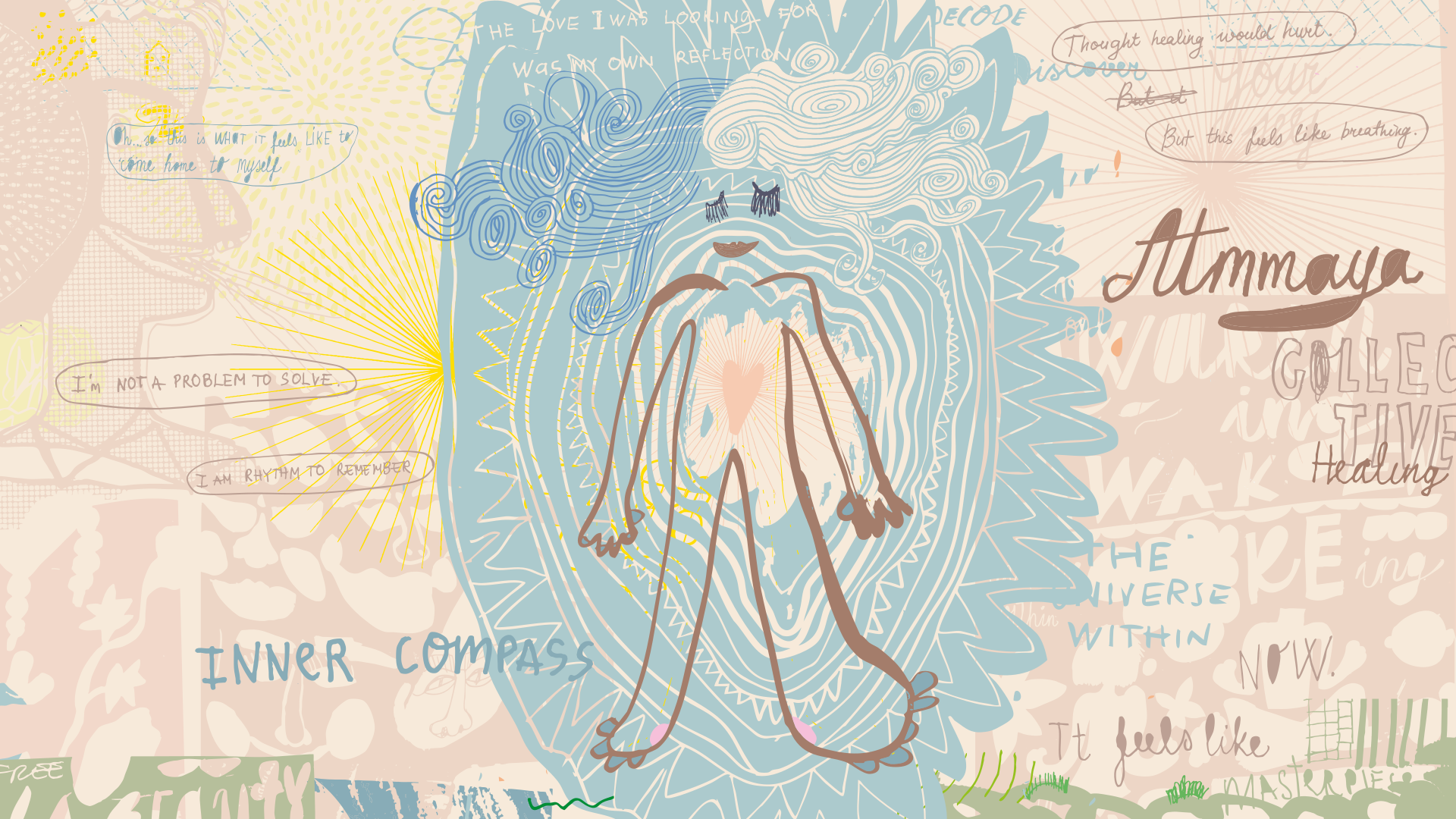
It has the extraordinary ability to change the way we experience our past. Isn't that wonderful? Imagine carrying a painful memory that continues to hurt your heart. What is stopping you from repainting it? Imagine picking up a painter's roller, dipping it into white paint, and gently painting over that memory. Not to erase it. Not to deny it. But to soften it.
To acknowledge the pain, understand it, and then slowly paint over it with compassion until what remains is no longer the wound, but the lesson. As I look back at some of the most painful experiences of my own life, maturity has changed what I remember. Yes, I remember the pain. But hidden within that pain are moments of extraordinary goodness. There are acts of kindness. Moments of courage. Unexpected friendships. The touch of another human being. Hope.
For a long time, that frightened me.
I wondered...
If I remember the good, does that mean I somehow enjoyed the trauma? If I no longer hold on to the pain, will life bring the same lesson back because I haven't learnt it properly?
That question stayed with me for a very long time.
You see, life doesn't come with an instruction manual. No one tells us exactly how to understand suffering. No one explains how karma teaches. Lessons arrive quietly. They knock on our door again and again. We ignore them. Eventually, they stop knocking. They break the door down. Only then do we pay attention.
That is why it isn't what you remember that matters. It is what you learnt. My suffering didn't teach me pain.
It taught me courage.
It taught me not to make decisions out of desperation.
It taught me adaptability.
Tolerance.
Humility.
The value of kindness.
The healing power of touch.
The meaning of freedom.
It taught me that destiny and karma are far greater than my own plans.
Most importantly...
It taught me that the universe whispers before it shouts.
If we refuse to listen to the whisper, eventually the lesson arrives in a form we cannot ignore.
Perhaps that is why the soul comes to Earth. Not to avoid suffering. But to experience it with enough awareness that wisdom is born from it. Birth after birth. Lesson after lesson. The soul longs to evolve. It longs to become lighter. It longs to move one step closer to freedom. Closer to moksha.
So the next time you choose a memory to revisit...I hope you choose the one that reminds you of your strength. Not because the pain didn't happen. But because the lesson matters more than the wound. Perhaps that is the greatest freedom we are ever given. The freedom to choose not what happened...But what it means.
Shwetambari Bhatt
Frequently Asked Questions
Do we have the power to rewrite our past?
While we cannot change what happened, we can change how we experience and remember our past. We can choose to focus on the lessons rather than just the wounds.
What does it mean when the universe whispers before it shouts?
It means that life often sends us quiet lessons first. If we ignore those gentle nudges, the lessons eventually arrive in much harsher, unavoidable forms.
Why does the soul come to Earth?
The soul does not come to avoid suffering, but to experience it with awareness, gaining wisdom, evolving, and moving closer to freedom and moksha.
If I focus on the good memories, does that mean I enjoyed the trauma?
No. Acknowledging the good hidden within painful experiences, such as acts of kindness or moments of courage, is about softening the memory and focusing on the lesson, not denying the pain.