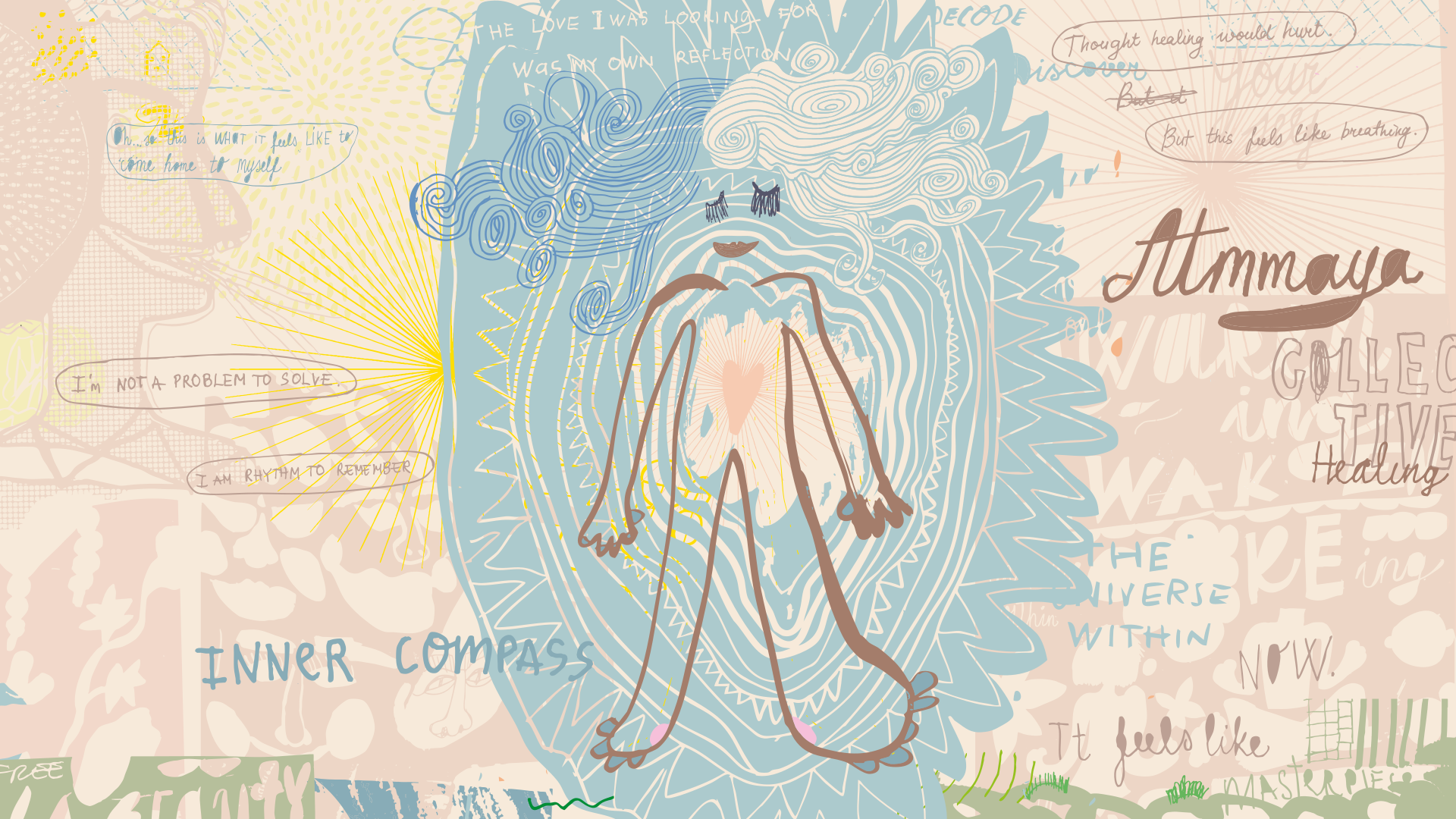
When the Self Becomes Too Loud
Written By: Janki Chotalia
20th January 2026

When the Self Becomes Too Loud
I came across an Instagram reel recently. One person asked another, “Why are you so confident?” She smiled and replied, “I think you guys think too much about yourselves.”
It was a simple line. Almost dismissive. And yet, it landed like a truth I had been circling for years without naming.
For most of my youth, I chased confidence as though it were a destination; something I could finally arrive at if I read enough self-help books, practiced enough affirmations, or fixed the “wrong” parts of myself. I didn’t want fame or power. I just wanted to feel worthy.
And yet, even now, my hands tremble when I speak to strangers. My voice shakes in meetings. My heart races when attention shifts in my direction. The external markers of confidence never quite arrived the way I thought they would.
What did arrive was a realisation that felt both uncomfortable and freeing.
All this time, I had been obsessed with how others perceived me.
Do I sound intelligent enough?
Do I look composed?
Did I say the right thing?
Me. Me. Me.
I. I. I.
Without meaning to, I had made myself the centre of every room I entered, not in confidence, but in self-consciousness. I stood under a spotlight I had created, constantly performing, constantly evaluating, and then wondered why I felt so exposed. So suffocated.
The Performative Myth of Confidence
We’re taught, subtly and loudly, that confidence looks a certain way.
It’s the loudest voice in the room.
The quickest response.
The sharpest wit.
The most connections.
The biggest laugh.
But that version of confidence is often performance, not presence.
True confidence doesn’t always announce itself. It doesn’t need witnesses. It doesn’t demand validation to exist.
Sometimes, confidence is a quiet whisper inside that says, “It’s okay. You are here. And that is enough.”
It can be soft.
It can be still.
It can live in the silence between breaths.
It exists in the courage to continue without applause.
Thinking of Yourself Less, Not Less of Yourself
There’s a subtle but powerful shift that changes everything:
Maybe confidence isn’t about thinking less of yourself, but thinking of yourself less.
When the constant internal narration quietens, something opens up.
You listen without rehearsing the perfect response.
You observe others without measuring yourself against them.
You speak without performing.
You exist without constantly editing your presence.
In psychological terms, much of our anxiety and self-doubt are self-generated, constructed within the realms of our own consciousness. Which also means something hopeful: what is constructed can be deconstructed.
Slowly. Gently. Step by step.
At The Ātmann Project, we believe that healing confidence isn’t about becoming someone else. It’s about unlearning the rigid, performative definitions we’ve inherited and replacing them with something sustainable.
Living With Fear, Not Erasing It
Perhaps the goal was never to eliminate fear.
Fear is human.
Fear is information.
Fear often means something meaningful is happening.
The real work is learning to live with fear without allowing it to control us. To let it sit beside us, instead of steering the wheel.
Maybe the goal isn’t to become the centre of attention but the centre of affection. To give and receive warmth without constantly monitoring how we are being perceived.
To speak, even when your voice shakes.
To dance, even when your legs feel unsure.
To live wholeheartedly, flawed, human, real, despite the imagined, judgemental voices in our heads.
Because in those small, trembling moments when you show up anyway, without armour, without performance, that might be where true confidence is born.
And quietly, deeply, yours.
Written with care,
Janki Chotalia
Frequently Asked Questions
1. What does it mean when the self becomes too loud?
It refers to excessive self-focus and self-consciousness that can create anxiety and reduce authentic presence.
2. Is confidence about being fearless?
No. Confidence often involves learning to live with fear rather than eliminating it.
3. What is true confidence?
True confidence is quiet, grounded, and does not rely on constant validation or performance.
4. How can self-consciousness be reduced?
By shifting attention outward, quieting internal narration, and practicing presence.